Directions
FIELD NAMES
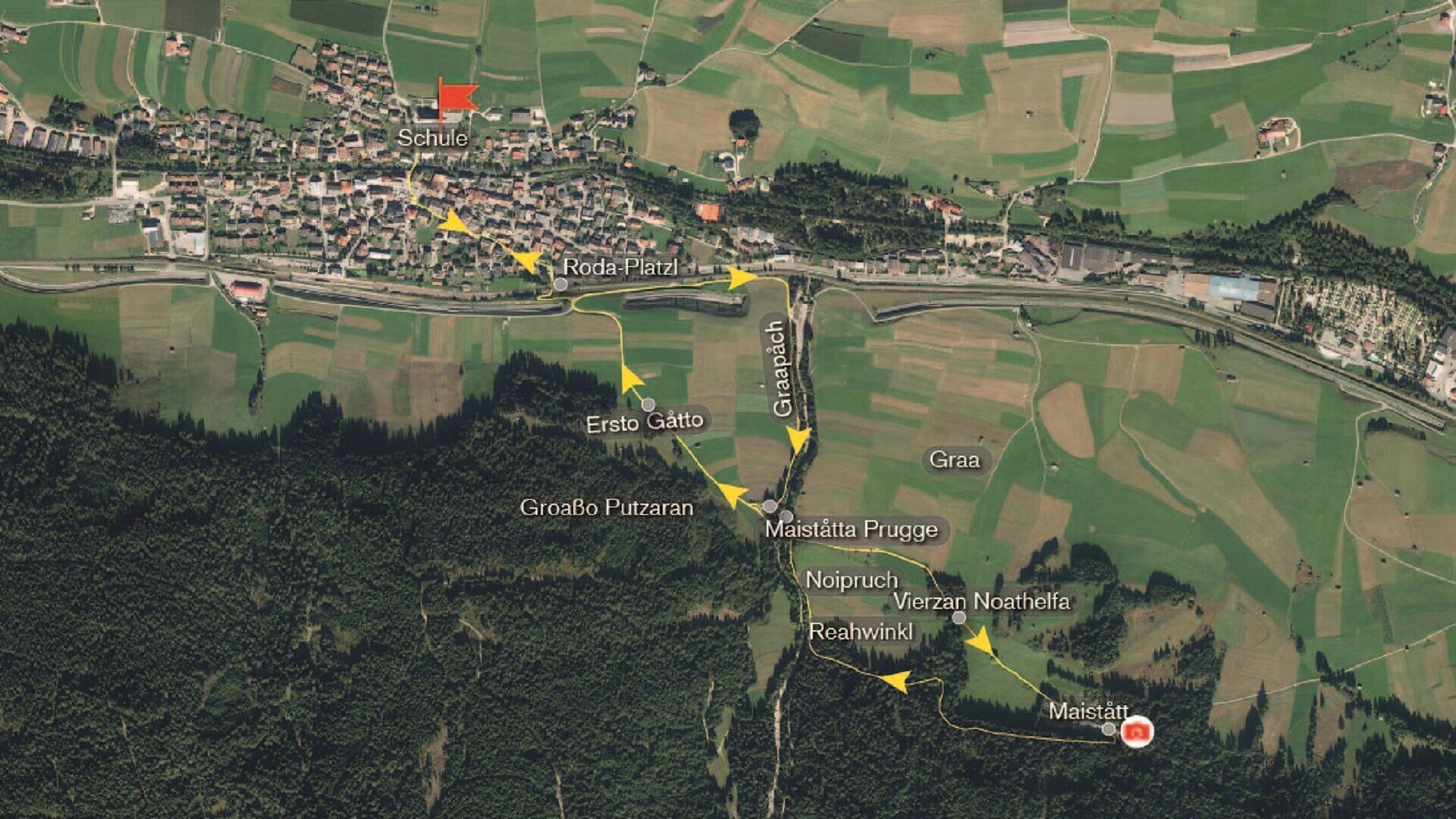
Ersto Gåtto / Kiågåto: Érsto Gåtto / Kíagåto = First gate / cattle gate; fence opening in the enclosed pasture on Maistattweg before the "Groaßn Putzaran";
Graa: Graa; gently sloping field east of the "Graapåch"; the name derives from the pre-Roman prehistoric name *grava "gravel, rubble, sand";
Graapåch: the Graapåch = the Graabách / the Graubach / the Putzbach; stream rising at the foot of the "Sarls", passing the "Putzålbe" towards "Kålchbründl", "Maiståtta Prugge" to the Rienz/Wiere; "graa" is old dialect for "gray"; during storms it carries gray mud and debris;
Groaßo Putzaran: Groaßo Putzarán = Large Putz-Ran; large, sloping forest area in the south of the municipality; the dialect word "Ran" refers to the German term "Rainhügel" (ridge hill); the mountainside is the "large Ran" in front of the "Putz";
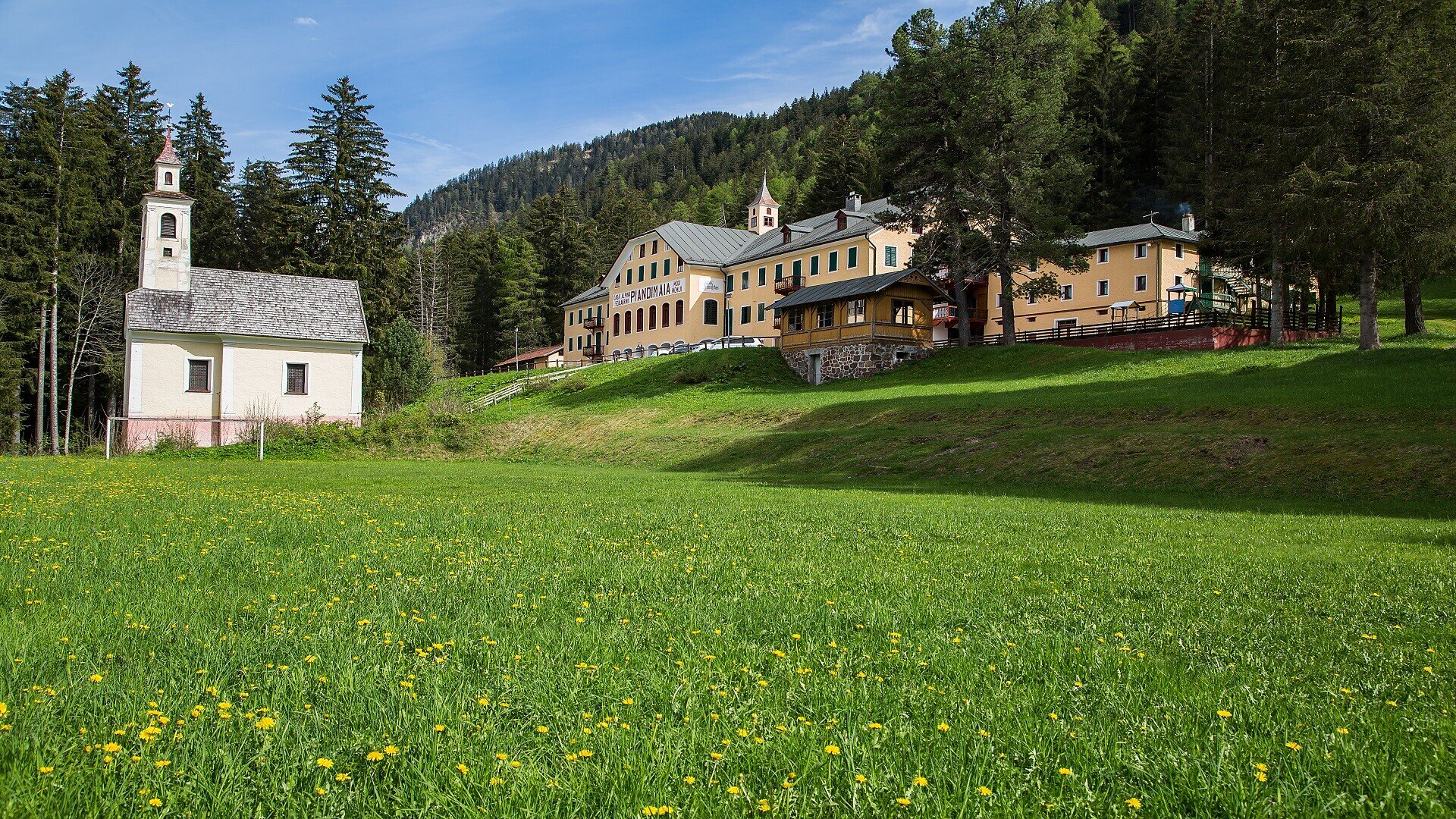
Maistått: Máistått = Maistatt (Bad Maistatt); building and field at the forest edge southeast of the village; the name "Maistatt" was first mentioned in 1305; over time several names appeared for the terrain and for the "pad"; but research suggests the term refers to a court or assembly place in connection with the cult sites "Suis" and "Purgståll" ("Malstat"); the healing water from the nearby spring led to the construction of a spa. In 1511 it was visited by Emperor Maximilian I.; from the 18th century to the beginning of World War I a lively bathing culture developed throughout Tyrol (see also "Weihapåd"); today the large building belongs to the Scalabrini Fathers of Bologna; next to it a chapel; the first was built in 1716; the current one in 1732; it is dedicated to St. John of Nepomuk and has a reddish marble altar; east of the small church was a war cemetery for those who died in World War I; today only a memorial stone reminds of this heartrending place;
Maiståtta Prugge: Máišta Prúgge = Maistatt bridge; bridge located at the fork to "Reahwinkl" – "Maistått" and crossing the "Graapåch"; at the roadside, a statue of St. John of Nepomuk watches over the waters of the Putzbach;
Noipruch: Nóirpuch = new break; field east of the "Graapåch" to "Reahwinkl"; the name means new clearing, newly created arable and meadow land;
Reahwinkl: Reahwínkl = deer corner; the corner at the forest edge where "Noipruch" and the Putz forest trail meet; preferred feeding ground for roe deer;
Roda-Platzl: Roda-Plátzl = Rader-Platzl; flat place in front of the railway underpass to Maistattweg; adjacent are the houses "Roda" of Leopold Troger (Roda Pold, wagon master) and "Harrasser-Neubau" (1904), a former guest and lodging business of the Harrasser family; also called Harrissa-Platzl = Harrasser-Platzl; both houses are now converted into pure residential homes;
Vierzan Noathelfa: Vierzan Nóathelfa = Fourteen Holy Helpers; wayside shrine near the "Maistått"; presumably erected in 1843 for pilgrims; the picture shows 14 saints or helpers from the 2nd to 4th century AD: Achatius, Ägidius, Blasius, Barbara, Christophorus, Cyriak, Dionysius, Erasmus, Eustachius, Georg, Katharina, Margareth, Pantaleon, Veit; still a popular place of power today;